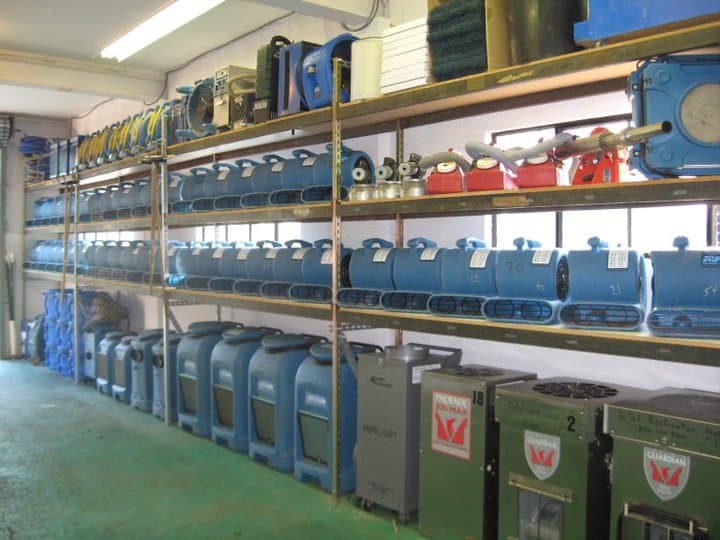
Commercial Tree and Debris Impact Damage.
A tree or wind-driven debris can damage a roof, wall, storefront, or other building area and can leave an opening for water entry. TRC documents the property damage, can perform temporary shoring within its scope, handles small tree work in-house, and coordinates larger tree work. Access and structural decisions remain with the responsible authorities or qualified professionals.
An impact can involve several responsible parties before repairs begin.
Emergency authorities or the utility may need to address downed lines, fire, roadway conditions, or immediate access restrictions. A qualified professional may be needed for structural direction case by case. TRC's assessment does not authorize entry or occupancy.
TRC can perform small tree work and coordinates larger tree work. Temporary shoring, debris handling, temporary weather protection, water-damage work, and building repairs should each be identified in the project-specific scope. The agreement should identify whether cutting, lifting, handling, hauling, or disposal is included and who performs it.
Confirm access and utilities before tree or building work.
Tell TRC whether emergency authorities, the utility, or a qualified professional has restricted the area or supplied direction.
Respect access and utility restrictions.
Keep people away from the impact area and any downed or contacted utility line. Emergency authorities and the utility control their respective release and access decisions.
Document the building damage.
We assess and document structural damage after access is permitted. Qualified structural direction or sign-off is handled case by case; TRC does not determine stability, occupancy, or code compliance.
Define temporary shoring.
TRC can perform temporary shoring when it is included in the agreed scope. Shoring supports the scoped restoration work; it is not a declaration that the structure is stable or may be occupied.
Define tree and debris responsibilities.
TRC handles small tree work in-house and coordinates larger tree work. Before work begins, the scope should identify access, cutting, lifting, handling, hauling, disposal, and responsibility for specialty providers as applicable.
Address the opening and resulting damage.
Project-specific tarping or board-up and any water extraction or structural drying are separate scope items. If retained for reconstruction, TRC manages the included building-repair trades under one accountable team.
Describe the impact from outside the restricted area.
Do not move the tree or debris, enter beneath the impact, or approach a utility line to gather details.
Report utility involvement.
State whether the tree or debris is touching a utility line, service mast, transformer, or electrical equipment. Contact the utility or emergency services for direction.
Identify the affected building area.
Describe the roof, wall, storefront, loading area, or other location involved without entering beneath the impact.
Report visible openings and water.
From a permitted location, note an opening or water entry so temporary protection and water-damage scope can be discussed separately.
Share access restrictions.
Tell TRC what emergency authorities, the utility, the owner, or a qualified professional has said about access.
Who handles each part of an impact loss?
Contact the utility and emergency services and follow their direction. TRC does not perform utility-line work or declare the area released. The property-restoration scope can be discussed after the responsible authority permits access.
TRC performs small tree work in-house and coordinates larger tree work. The project-specific agreement should identify whether the work is treated as small or large and assign cutting, lifting, handling, hauling, and disposal responsibilities.
TRC can perform temporary shoring within an agreed scope. Shoring does not make TRC the authority for structural stability, access, occupancy, engineering approval, or code compliance.
Emergency authorities, the owner, and appropriately qualified professionals retain their respective access and occupancy decisions. TRC documents conditions and coordinates its scoped work; it does not authorize entry or occupancy.
More on commercial storm damage.
Discuss the building damage after a tree or debris impact.
Tell us about utility involvement, access restrictions, visible openings, water entry, and the approximate tree or debris condition.