Commercial biohazard and trauma cleanup.
When a reported biohazard or trauma incident affects a commercial property, TRC confirms access, defines the work it can accept, performs the agreed cleanup, and documents that work.
Confirm authority, define the area, and document the accepted work.
Property, workplace, insurance, regulatory, and occupancy decisions remain with the people responsible for them.
Confirm the responsible contact.
Identify who controls access, whether an authority must release the area, and who may approve the work. Provide the information needed to evaluate and coordinate the request.
Define the affected-area scope.
TRC reviews the accessible area and identifies the materials and tasks proposed for its work. Concealed conditions or newly reported materials may require a revised scope.
Perform the accepted cleanup.
Technicians with bloodborne-pathogen training address the accessible materials included in the agreed scope. Products and methods are selected for the material and condition; this does not determine whether the area may be occupied or used.
Coordinate off-site waste handling when required.
When the agreed scope requires off-site transport, TRC coordinates a licensed subcontracted waste hauler. TRC is not the licensed transporter.
Provide the work record.
TRC documents the work it performed and identifies related repair work, if any. The property owner, facility, employer, carrier, or responsible authority makes its own compliance, coverage, operation, and occupancy decisions.
Start with the incident, access status, and affected area.
Discuss the requested work and access status with TRC before approving a cleanup scope.
Training, disposal coordination, odor methods, and repair management.
The agreed scope should state which cleanup, hauling, odor, duct, and repair tasks TRC will perform or coordinate. A listed capability is not a promise that it is appropriate for a particular incident.
Bloodborne-pathogen training
TRC technicians have bloodborne-pathogen training. Training does not transfer an employer's workplace-compliance duties to TRC.
Licensed-hauler coordination
When off-site transport is included, TRC coordinates a licensed subcontracted waste hauler. Project-specific handling and documentation depend on the accepted material and scope.
Available odor-treatment methods
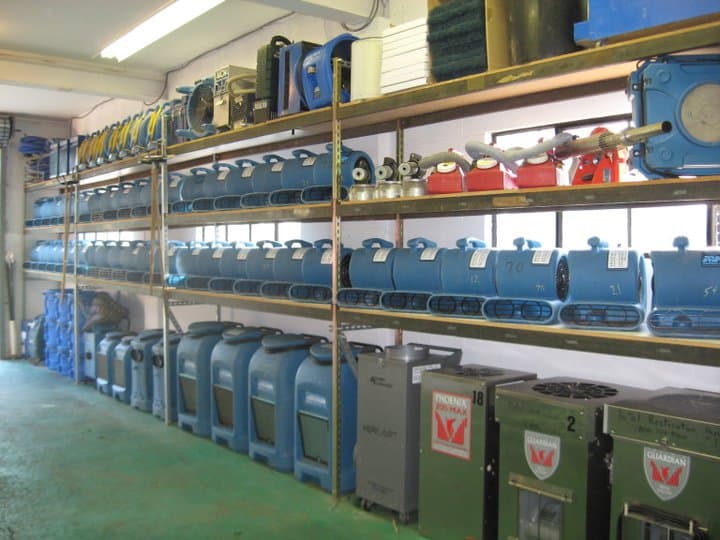
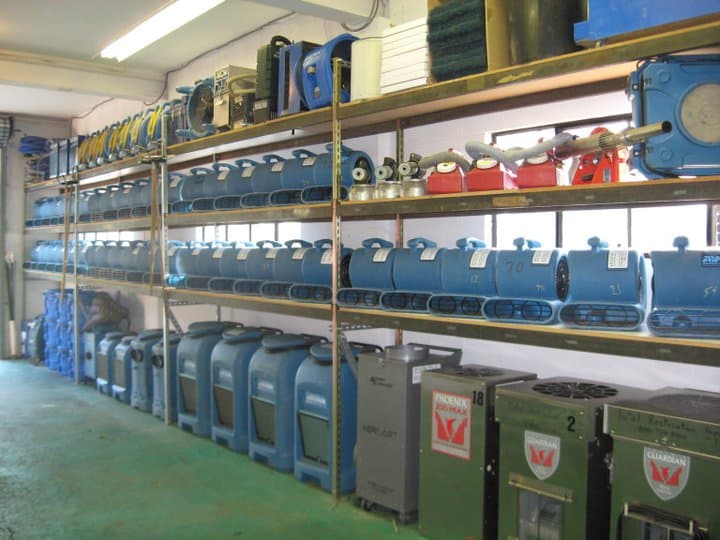
TRC uses ozone, hydroxyl, thermal fogging, and equipment named Vapor Shark. Method selection depends on the affected materials, site conditions, and agreed scope; use of a method does not establish an air, odor, or occupancy result.
Duct cleaning and related repairs
If an incident creates a duct-cleaning or building-repair scope, TRC may perform or subcontract duct cleaning and can manage included repairs. One accountable team from mitigation to rebuild, for repairs included in the accepted scope. This does not include a complete mechanical-system service or a code, safety, or occupancy decision.
What kind of commercial biohazard are you dealing with?
Each scenario below is its own job — different cause, process, and documentation. Tell us which one, or call and we'll figure it out together.
Trauma & Crime-Scene Cleanup
After law enforcement, the coroner, or another responsible authority releases the area, TRC confirms access with the property contact, defines the cleanup work it can accept, and documents the completed scope. TRC does not control scene release or reopening.
Learn moreBlood & Bodily-Fluid Cleanup
After urgent care and workplace response needs are addressed, TRC can assess the affected property area, define a cleanup scope, and document the work it performs. Employee medical care and employer compliance remain separate from TRC's property-cleanup role.
Learn moreSewage & Category 3 Cleanup
TRC assesses the accessible affected area, scopes extraction and material removal, and documents its water-mitigation work. Work performed to IICRC S500 standards. Property closure, health-code, inspection, and reopening decisions remain with the responsible owner or authority.
Learn morePublic-Safety Facility Cleanup
TRC accepts blood and bodily-fluid and trauma cleanup in holding and booking areas, police and transport vehicles, EMS vehicle areas, and public-safety staff and common areas. Work begins after the responsible agency releases the area.
Learn moreHealthcare & Senior-Living Cleanup
TRC accepts blood and bodily-fluid and trauma cleanup in assisted living and memory care, skilled nursing and rehab, clinics, and other healthcare settings. A facility-designated contact directs access, site requirements, and the work-area handoff.
Learn moreNot sure which fits? Call 610-489-1650 — describe what you're seeing and we'll take it from there.
TRC documents its work; the carrier decides coverage.
Q.Is commercial biohazard cleanup covered by insurance?
Coverage depends on the policy, cause, and carrier decision. We document losses and coordinate with insurance carriers. Ask the carrier which portions of the reported loss it will review and what policy terms apply.
Q.What does TRC document?
TRC provides a record of the work it performed within the agreed scope. When a licensed subcontracted waste hauler is used, ask before work begins which project-specific disposal records will be available. TRC does not promise that its records satisfy a regulator, employer, facility, or carrier requirement.
Q.Who does TRC bill?
We bill your insurance directly. Direct billing is not a coverage decision or a promise that the carrier will pay a charge.
Q.Who decides when the area can return to use?
TRC does not make occupancy or reopening decisions. The property owner or facility follows the responsible authority, workplace professional, or other decision-maker for the incident. TRC supplies documentation of its own work.
Serving Commercial Properties Across Southeastern Pennsylvania.
Serving Montgomery, Chester, Berks, Bucks, Delaware, and Philadelphia counties in Southeastern Pennsylvania.
Montgomery County
Berks County
Chester County
Bucks County
Delaware County
Philadelphia County
Manage property outside these towns? View all service areas. Call us — 610-489-1650
Provide the information needed to discuss the work.
Provide the property contact, access status, and a basic description of the affected area. Unrelated personal details are not needed.
Commercial biohazard cleanup questions.
Provide the property contact, the affected area's access status, whether police, a coroner, or another authority is involved, and a basic description of the visible condition. Do not disturb the area to gather more detail.
Emergency dispatch is based on severity. Call with the property location, access status, and reported condition.
Provide the information needed to discuss the property work. Unrelated personal details are not needed. Discuss scheduling and site access with the responsible property contact.
No. TRC defines and documents its work. The property owner, facility, employer, or responsible authority decides access, operation, occupancy, or reopening.
When the accepted scope requires it, TRC coordinates a licensed subcontracted waste hauler. Ask during scoping which materials are included and which records will be available for the project.
If the accepted scope requires removal and repair of building materials, TRC can manage the included work. One accountable team from mitigation to rebuild, for repairs included in the accepted scope. The repair scope does not establish code compliance, occupancy, or a completion date.
Specialist narcotic decontamination is outside TRC's scope. Do not disturb the material. Follow your organization's emergency or exposure procedure and engage an appropriately qualified specialist for any narcotic-residue decontamination.
Separate the cleanup from the related property work.
Discuss the affected area and the next decision.
Tell us who controls access, what was reported, and whether an authority is involved.