Commercial Fire Contents Inventory and Storage
TRC can document contents included in an agreed fire-loss scope and discuss storage at its own facility or with a third party. TRC does not offer document recovery or internal electronics restoration.
Documentation, custody, and storage location should be agreed.
Contents work begins by identifying which items are included, who authorizes movement, and where storage will occur. The incident name alone does not determine restorability, value, coverage, or disposition.
Items included in the agreed scope
TRC documents the contents assigned to its portion of the loss. The scope should distinguish those items from property retained by the owner or handled by another provider.
TRC and third-party storage options
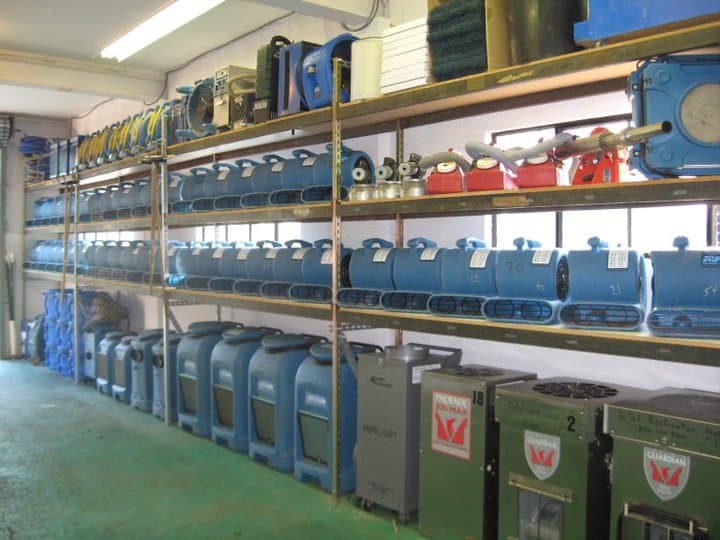
TRC has its own storage facility and may also use third-party storage. The selected location depends on the agreed scope; TRC does not promise a particular security or insurance arrangement.
Specialty items need separate answers
Documents and electronics may require item-specific evaluation. The available evidence does not establish document recovery or internal electronics cleaning as a TRC service.
Agree what is included, where it will go, and who is responsible.
The written scope should define the contents assigned to TRC and the responsibilities that apply before anything moves.
Define the included contents.
Identify the rooms, item groups, or inventory included in TRC's documentation scope. Access restrictions and owner instructions remain part of that discussion.
Document condition within the agreed scope.
TRC documents losses assigned to its work. The record can support owner and carrier review but does not determine value, coverage, restorability, or claim payment.
Choose a storage arrangement.
When storage is included, discuss use of TRC's storage facility or third-party storage. Identify who authorizes movement and who holds custody at each stage.
Record release or return responsibilities.
The written scope should state how authorization for release or return will be recorded. Ask what records apply before items are moved.
Identify authority, access, and specialty items.
Follow fire-scene restrictions and the owner's property-control procedures.
Identify who can authorize movement.
Provide the owner or facility contact responsible for contents decisions and access.
Separate specialty items.
Point out documents, records, electronics, or equipment without treating recovery or internal cleaning as an included TRC service.
Do not energize affected electronics.
The appropriate electrical or equipment specialist should determine evaluation, testing, repair, or replacement.
Commercial fire contents questions.
TRC has its own storage facility and may also use third-party storage. The agreed scope should name the location, movement responsibilities, custody transfer, access, and authorization for release or return.
TRC's scope is visible-condition documentation and storage. Document recovery and internal electronics cleaning, testing, repair, or replacement require an appropriate specialist and are not included in TRC's offer.
No. We document losses and coordinate with insurance carriers. The carrier decides coverage and claim payment under the policy; TRC's documentation does not determine those decisions.
Those responsibilities must be defined in the agreed scope and owner authorization. TRC does not promise a disposition decision or carrier approval from the item description alone.
More on commercial fire & smoke.
Discuss contents documentation and storage after a fire.
Share the affected areas, the person authorized to make contents decisions, and any known storage requirements.