Commercial sewage and Category 3 water cleanup.
TRC assesses the accessible affected area, scopes extraction and material removal, and documents its water-mitigation work. Work performed to IICRC S500 standards. Property closure, health-code, inspection, and reopening decisions remain with the responsible owner or authority.
A sewage loss requires a different scope from a clean-water loss.
When sewage affects a commercial property, the source, accessible area, materials, and time involved shape the proposed mitigation scope. TRC distinguishes this Category 3 work from a clean-water loss and documents the conditions included in its assessment.
TRC evaluates affected porous and non-porous materials for the work it can perform. The owner or responsible authority decides closure, inspection, code, operation, and reopening requirements; TRC does not supply those determinations.
Confirm the source status, remove standing water, and document the affected materials.
Work performed to IICRC S500 standards. Related repair work is a separate scope.
Confirm access and source status.
We ask what caused the reported loss, whether the source has been stopped by the responsible party, and which areas are available for assessment. Do not enter the affected area to collect more detail.
Extract standing water.
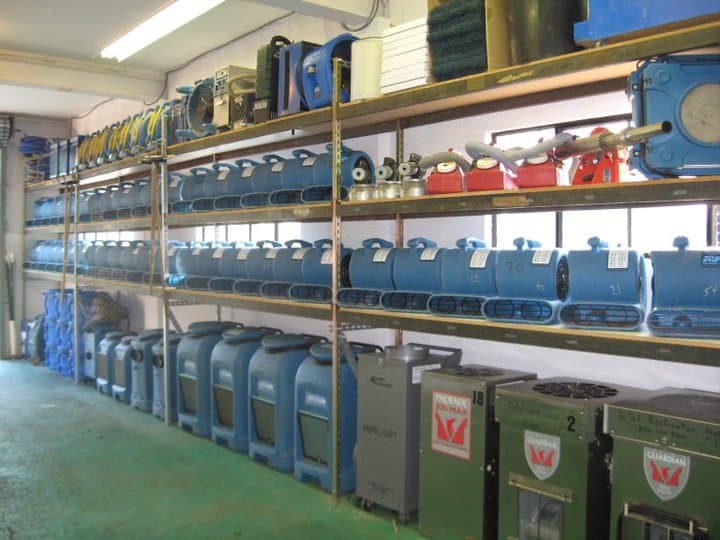
TRC uses in-house extraction equipment selected for the accessible area and conditions. The extraction scope does not determine that the area may remain open or occupied.
Evaluate affected materials.
TRC identifies accessible materials in scope and proposes removal where cleaning and drying are not appropriate. Removed materials are handled under requirements applicable to the material and project.
Perform and record mitigation.
Work performed to IICRC S500 standards. TRC records the mitigation work and relevant moisture readings without representing them as a health, code, occupancy, or reopening determination.
Separate repairs from mitigation.
If the agreed work requires building repairs, TRC can manage the included repair scope. One accountable team from mitigation to rebuild, for repairs included in the accepted scope. The scope does not promise a completion or reopening date.
Keep people out and avoid spreading the affected water.
Use the property owner's emergency procedure while waiting for qualified help.
Restrict access.
Keep staff, tenants, customers, and contractors out of the affected area without walking through it to place barriers.
Stop the source only if authorized and safe.
The responsible building or utility professional should address the source. Do not enter the affected area or operate equipment if doing so creates a hazard.
Do not assign cleanup to staff.
Avoid mopping, moving affected materials, or carrying items through unaffected areas before the work is assessed.
Call with observations from outside.
Share the reported source, visible extent, affected floor or room, and access contact. Salvageability depends on the materials, conditions, and time involved.
Commercial sewage-cleanup questions.
Coverage depends on the policy, source, and carrier decision. We document losses and coordinate with insurance carriers. We bill your insurance directly. Direct billing does not establish coverage.
The property owner follows the responsible facility, health, or other authority. TRC supplies documentation of its mitigation work but does not make closure, health-code, occupancy, or reopening decisions.
Handling depends on the material and project. The scope identifies what TRC will remove and whether a licensed subcontracted waste hauler is required; do not assume all removed construction material has the same classification.
Tell TRC about access and operating constraints during scoping. Sequencing may be discussed where conditions allow, but TRC does not determine which areas may operate or promise uninterrupted business.
Work performed to IICRC S500 standards. It describes the work standard for the water-mitigation scope; it does not decide health-code status, occupancy, or reopening.
More on commercial biohazard.
Discuss the sewage source and affected area.
Tell us what was reported, whether the source is stopped, and who controls building access.