When the storm passes, the water stays.
Heavy rain overwhelms gutters, drains, and sump pumps, and pushes water in through foundations, window wells, and doors. The weather moves on, but the water sits in your home doing damage. Fast extraction is what keeps a flood from becoming a rebuild.
It comes in dirty, and it comes in everywhere.
Storm flooding doesn't enter through one tidy failure — it finds every weak point at once: foundation cracks, window wells, door thresholds, and an overwhelmed sump pump that can't keep up with the volume. It often arrives in the lowest level of the house and pools there with nowhere to drain.
It's also rarely clean water. Ground water and storm runoff carry soil, debris, and contaminants, which can push it into a higher damage category that changes how much can be safely saved. We assess what the water is, extract it fast, and dry to a measured standard — because trapped storm moisture is exactly where mold starts.
Where storm water gets into a house.
Knowing your home's weak points helps you act fast when the rain comes. These are the entry paths we see most often across Southeastern Pennsylvania.
A sump pump that can’t keep up
During a heavy storm, a pump that fails, loses power, or simply gets overwhelmed means a flooded basement by morning.
Foundation cracks and window wells
Saturated ground pushes water through hairline foundation cracks and over-full window wells straight into the basement.
Overwhelmed gutters and grading
Clogged gutters and ground that slopes toward the house dump rainwater right against the foundation instead of away from it.
Door thresholds and low entries
When surface water rises faster than drains can carry it, it comes in under doors and through walk-out and garage entries.
Extract fast, dry it down, get ahead of the mold.
Our own crews handle emergency mitigation start to finish. For rebuilds, we manage every trade under one accountable team. Storm-water restoration stays on one managed schedule from the first pump through rebuild.
We assess and stop further intrusion
First we find where the water is still getting in — a failed sump, a window well, a foundation crack — and stop or divert it so we're not extracting a space that's still taking on water.
We extract fast
Submersible pumps and truck-mount extractors clear standing storm water quickly. Speed matters most here — the sooner the water's out, the less it soaks into structure and belongings.
We dry to a measurable standard
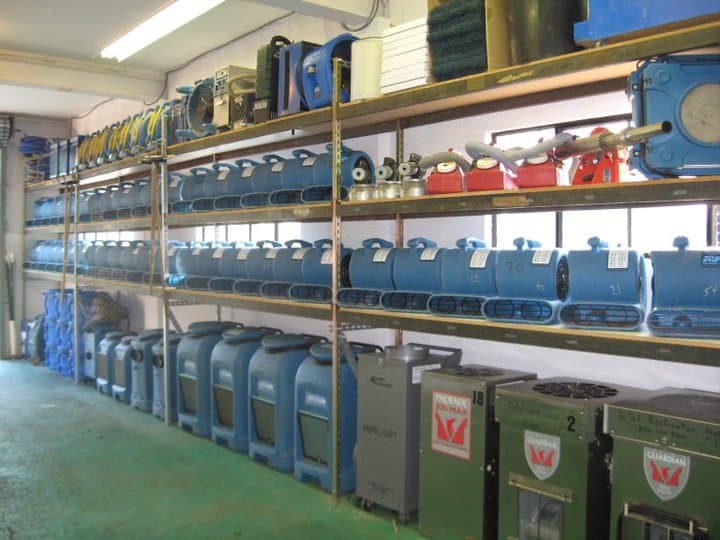
Work performed to IICRC S500 standards. Air movers and Phoenix 200 MAX dehumidifiers dry the slab, walls, and framing, tracked on a daily moisture log so “dry” is proven, not guessed.
We treat and rebuild
Because storm water is often contaminated, we apply antimicrobial to affected surfaces, then TRC manages the rebuild and talks through steps to help keep the next storm out.
Storm-flooding questions, honestly answered.
Water rising from outside may require separate flood insurance, while rain entering through sudden storm damage may be treated differently. Coverage depends on how the water entered and on the policy. We document losses and coordinate with insurance carriers. We bill your insurance directly.
How the water got in. A burst pipe is sudden internal damage most policies cover; storm water rising from outside typically falls under separate flood insurance. It's not about how much damage there is — it's about the source, which is exactly why we document the cause carefully for your claim.
Often, yes. Storm and ground water carries soil, debris, and contaminants, which can put it in a higher damage category than clean water — and you can't tell by looking. We assess what the water is before deciding what's safe to save, and handle contaminated water with proper protection and disposal.
Right away. Storm water does the same structural damage as any other flooding within about 48 hours — and because it often comes in dirty and pools in the lowest level, the mold risk is high. We keep a drying fleet staged in Limerick precisely so we can move fast when a storm hits the whole area at once.
We can point you in the right direction. While we're drying things out we'll flag the weak points we find — a failing sump, poor grading, foundation cracks, overwhelmed gutters — so you know where to focus before the next storm. Our job is the restoration, but we'll be straight with you about prevention.
More on water damage restoration.
Explore More
Restoring Your Life Back To The Way It Should Be.
After the storm, the clock is still running.
A real person answers 24/7.