Water pools in the lowest room. Get it out fast.
A flooded basement soaks everything it touches from the ground up — carpet padding, drywall bottoms, finished framing, and stored belongings. We extract the water, dry the slab and walls to a measured standard, and tell you honestly what can be saved.
Gravity brings the water here — and traps it.
A basement is where every leak, overflow, and storm eventually ends up, and once water is in, it has nowhere to drain. It sits against the slab and the bottom of the walls — wicking up drywall, soaking sill plates, and saturating carpet padding that acts like a sponge you can't wring out.
Finished basements make it worse: the water hides behind paneling and under laminate where it's easy to miss and slow to dry. Left alone, a damp basement becomes a humid one, and that trapped moisture is exactly where mold starts quietly — often weeks after the water looked gone.
What a flooded basement really damages.
It's rarely just the water on the floor. Here's what a basement flood reaches — and why fast extraction matters most down here.
Carpet and padding
Padding holds water like a sponge and almost always has to come out. Carpet itself can sometimes be saved if we extract fast.
The bottom of finished walls
Drywall wicks moisture up from the floor; the lower foot or two often needs a flood cut and replacement.
A failed or overwhelmed sump pump
The most common cause we see — a pump that quit, lost power, or simply could not keep up with the water.
Stored belongings and furniture
Boxes, keepsakes, and furniture sitting on a wet slab wick moisture fast — we sort what can be dried and salvaged.
Pump it out, dry it down, save what we can.
Our own crews handle emergency mitigation start to finish. For rebuilds, we manage every trade under one accountable team. Basement restoration stays on one managed schedule from pumping through rebuild.
We stop the water coming in
First through the door, we find the source — a failed sump pump, a foundation crack, an overwhelmed drain — and stop or divert it so we're not draining a basement that's still filling.
We pump and extract
Submersible pumps clear standing water fast; truck-mount extractors pull what's soaked into carpet and padding. The quicker the water's gone, the more of your finished basement survives.
We dry the slab and walls to a number
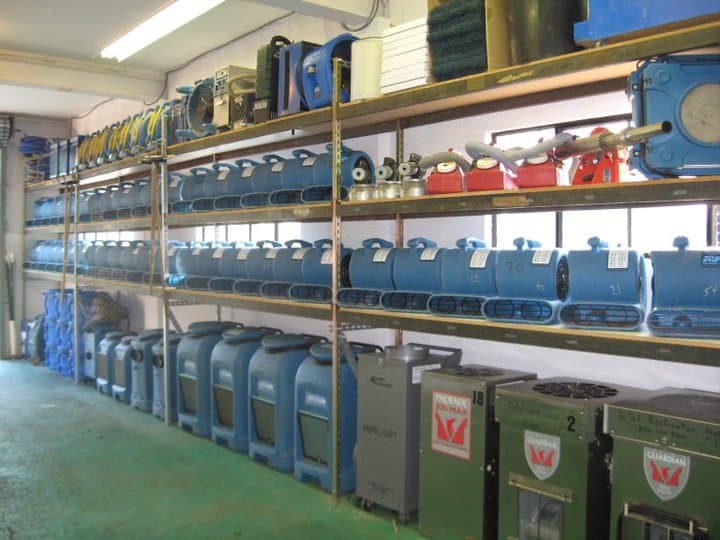
Work performed to IICRC S500 standards. Air movers and Phoenix 200 MAX dehumidifiers dry the concrete, framing, and drywall, tracked on a daily moisture log so “dry” is proven, not assumed.
We treat and rebuild
Antimicrobial goes on every affected surface; then TRC manages drywall, flooring, and trim and explains what belongings may be restored versus written off.
Basement-flooding questions, honestly answered.
It depends on the cause and policy. An interior burst pipe, surface water, groundwater, and sump or sewer backup may be treated differently. We document losses and coordinate with insurance carriers. We bill your insurance directly.
Not necessarily. Sump-pump failure and overflow is a common cause of loss, and many policies cover it if you carry the endorsement for it. We document the failure and the damage carefully so your adjuster sees the full picture.
Often we can save more than you'd expect if drying starts early. Carpet may be salvageable, and drywall dried quickly may not need a flood cut. Padding almost always goes. The longer the water sits, the more we have to remove — which is exactly why the first call matters.
Concrete and below-grade spaces hold moisture longer than the rest of the house, so most basement dry-outs run several days. We monitor readings daily and pull the equipment only when the slab and walls confirm genuinely dry — not when it merely looks dry.
That smell is the signature of moisture left behind, usually trapped in padding, behind paneling, or in the slab. It means the space was never dried to a measured standard. We find the hidden moisture with meters and dry it out properly — the smell leaves with the water.
More on water damage restoration.
Explore More
Restoring Your Life Back To The Way It Should Be.
A flooded basement only gets worse overnight.
A real person answers 24/7.