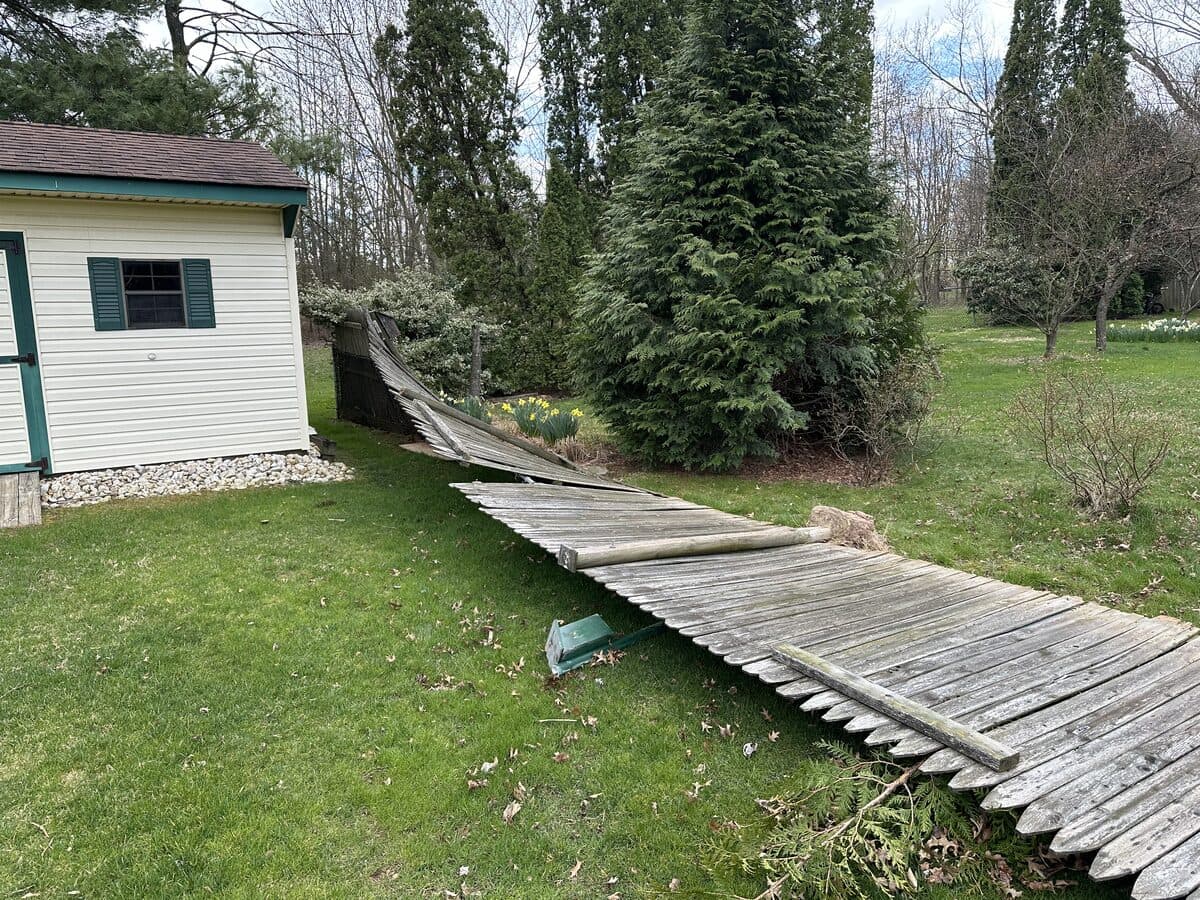
Wind peels the envelope open. The rain follows it in.
A high wind that tears off siding or lifts shingles does more than look bad — it opens a path for wind-driven rain to get behind the wall. We seal the breach, dry what got wet, and rebuild the envelope so it sheds water again.
Your walls are only weatherproof if the skin is whole.
Siding, housewrap, and shingles are one continuous skin whose only job is to keep water on the outside. Tear a section loose and wind-driven rain drives straight into the wall cavity — soaking sheathing, insulation, and framing you can't see from the curb. The wall looks fine from the street while it quietly rots from the inside.
That's the trap with wind damage: the missing panel is obvious, but the water it let in is not. We seal every breach in the envelope, then use moisture meters and thermal imaging to find the water that wicked into the cavity and dry it before it turns into rot and mold on top of the storm damage.
After a windstorm, walk the outside and check for these.
Wind damage is easy to underrate because the wall still looks solid. These are the signs the envelope is compromised.
Missing, cracked, or rattling siding
Panels torn loose, cracked, or that clatter in the wind mean the skin is broken and rain has a way in.
Lifted or missing shingles
Shingles curled back or gone let water under the roof edge and into the top of the wall — often above where you notice.
Interior stains or bubbling paint
A stain or bubbling paint on an inside wall after a windstorm means water already reached the cavity behind it.
A musty smell along an exterior wall
A persistent damp odor near an outside wall is often the first sign moisture is trapped in the sheathing and starting to rot.
Seal it, dry it, document it, restore it.
Our own crews handle emergency mitigation start to finish. For rebuilds, we manage every trade under one accountable team. We close and rebuild the envelope so the breached wall sheds water again.
We close the breach
Wrap, board, and seal every spot the wind opened — torn siding, lifted shingles, blown-in trim — to stop more rain from getting behind the wall. We're typically on-site within two hours — often sooner — for emergencies.
We find the water it let in
Moisture meters and thermal imaging map where wind-driven rain wicked into sheathing and insulation, so we dry the cavity instead of sealing it up wet.
We document it for insurance
Photos and measurements of the wind path from the first visit — the record your adjuster needs to see that the damage runs deeper than one missing panel.
We make the envelope whole again
New housewrap, siding, shingles, and any drywall the water touched — matched to what was there, so the wall sheds water and looks right again.
Wind and siding questions, honestly answered.
It usually matters a great deal to your claim. Damage from wind that breaches your siding or roof and lets rain in is typically covered by homeowners insurance; rising water from outside ('flood') generally needs separate flood coverage. We document the cause carefully because that distinction decides how your claim is handled.
Yes. Wind damage hides. The missing siding is obvious, but the water it let into the wall cavity is not — and by the time it shows as a stain inside, it has usually been rotting the sheathing for a while. We scan the wall to confirm whether water got in, rather than guessing from the outside.
In most cases, yes. We source siding, shingles, and trim to match what you have so the repair blends in rather than standing out as a patch. Where an exact match no longer exists, we tell you honestly and walk you through the options.
Both. Our own crews handle emergency mitigation start to finish. For rebuilds, we manage every trade under one accountable team. Sealing, measured drying, and rebuild stay on one schedule.
Soon. The breach is open to every rain until it's sealed, and each storm pushes more water into the wall. Sealing it quickly is the difference between drying a cavity and tearing out rotted framing later.
More on storm damage restoration.
Explore More
Restoring Your Life Back To The Way It Should Be.
Every storm finds the hole the wind left.
A real person answers 24/7.