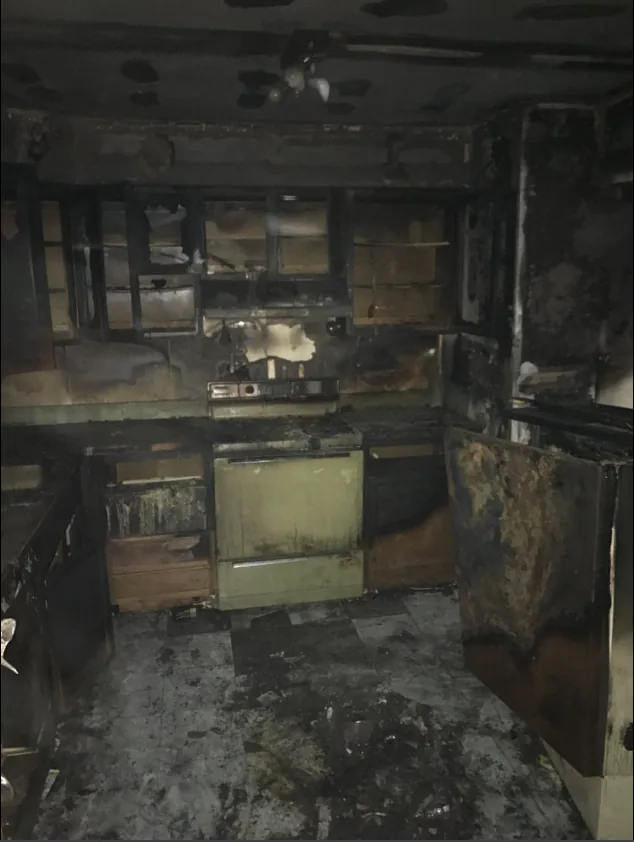
A grease fire smears. Water makes it worse.
The most common house fire we see leaves a greasy, protein-based film that reeks and resists ordinary cleaning. We lift it with the right solvents, chase the odor out of the structure, and rebuild the kitchen — one Limerick-based family crew.
It's not dirt — it's a film that bonds.
A burning pan puts up protein-based, greasy soot that behaves nothing like ordinary smoke residue. It smears when you wipe it, spreads across cabinets and countertops, and carries a sharp burnt-food odor that settles into every porous surface in the room. Reach for a wet rag and you drive it deeper.
And smoke residue is acidic — within hours it starts to etch glass, pit metal, yellow plastics, and discolor countertops and grout. In an open-floorplan home a contained stovetop fire can smoke out the whole first floor in minutes, so the greasy film settles far past the kitchen. The faster we neutralize it, the more of your home comes back — which is why we keep a fire response kit staged in Limerick.
The tells of a grease fire, even a small one.
A pan fire that looked contained can still coat a room. If any of these sound familiar, call — the greasy film only bonds harder the longer it sits.
Greasy soot that smears
Wipe it and it smudges instead of lifting — the sign of protein-based residue that needs solvents, not a wet rag.
A sharp burnt-food smell that stays
The odor settles into cabinets and drywall and keeps reeking long after the smoke clears.
Yellowed plastics and dull metal
Acidic residue discolors plastics, pits metal, and etches glass within hours of the fire.
Film well past the kitchen
In an open floor plan the greasy haze drifts across the whole first floor, not just the stove.
Lift the grease, kill the smell, rebuild the kitchen.
Our own crews handle emergency mitigation start to finish. For rebuilds, we manage every trade under one accountable team. Kitchen-fire restoration stays on one managed schedule from cleanup through rebuild.
We secure the space
We make the area safe and contain the greasy residue so foot traffic and airflow stop spreading it into the rest of the house. Emergency calls are prioritized day or night.
We protect your contents
Before cleaning starts, we document and pack out what can be saved — cookware, small appliances, keepsakes near the stove — for specialized offsite cleaning. What's salvageable, we save.
We lift the greasy soot
Chemical dry-sponging and EPA-registered cleaning agents cut the protein film off cabinets, walls, and ceilings — solvents, not water, because water just smears it. HEPA air scrubbing pulls the airborne particulate.
We neutralize the burnt-food odor
Grease-fire smell hides deep in porous cabinetry and drywall. We use ozone or hydroxyl treatment and thermal fogging to chase the odor into the same places it settled — not mask it with fragrance.
We rebuild it like it never happened
TRC manages cabinetry, backsplash, drywall, flooring, and paint on one schedule. Our own crews handle emergency mitigation start to finish. For rebuilds, we manage every trade under one accountable team.
Grease-fire questions, honestly answered.
Coverage depends on the cause and policy. We document fire, smoke, and firefighting-water damage for carrier review. We bill your insurance directly.
Because grease-fire residue is protein-based — water and household cleaners smear it and drive it deeper into the surface. We use chemical dry-sponging and EPA-registered cleaning agents made to lift that film, and we get to it before the acidic residue permanently etches and discolors your surfaces.
Often, if cleaning starts early. Chemical dry-sponging lifts soot off cabinetry and walls before it sets, and that first day is what decides cleaned versus replaced. The longer the greasy film and acidic residue sit, the more likely finishes need to be redone as part of the TRC-managed rebuild.
Yes, when it's done right. The odor lingers because residue settles deep in porous cabinets and drywall. We remove the source residue first, then use ozone or hydroxyl treatment and thermal fogging to neutralize what's left — not perfume over it with a fragrance that fades in a week.
No. Our own crews handle emergency mitigation start to finish. For rebuilds, we manage every trade under one accountable team. We manage cleaning, deodorizing, cabinetry, backsplash, drywall, flooring, and paint on one schedule.
More on fire & smoke restoration.
Explore More
Restoring Your Life Back To The Way It Should Be.
Every hour, the greasy soot sets a little deeper.
A real person answers 24/7.