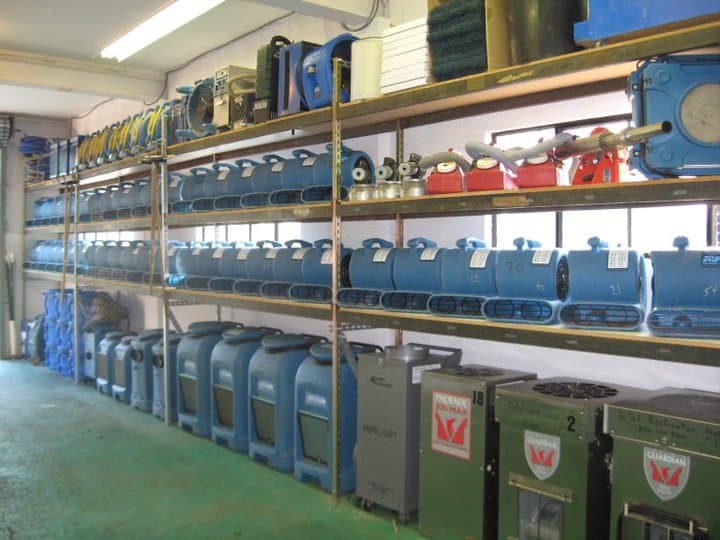
Commercial mold remediation after a flood or water loss.
Mold reported after a water loss can indicate that moisture remained in a concealed assembly or that another moisture condition developed. TRC scopes the affected materials accessible to the project, documents its work, and keeps any independent testing separate.
A later mold report calls for a new scope, not an assumption about the first response.
Moisture can remain in insulation, subflooring, or wall cavities even when exposed surfaces appear dry, and a later moisture condition can also affect the same area. The next scope should use the available loss records and current accessible conditions without declaring that another contractor failed.
Use the original loss records
The reported water source, affected areas, material-removal records, and prior work help define what requires further investigation.
Do not apply one classification across flood events
If the original loss was classified as Category 3 or involved a sewage backup, record that fact. Material decisions still belong in the project-specific scope.
Set the remediation sequence before finishes return
The remediation scope, any source repair, optional independent verification, and reconstruction handoff should be assigned before dependent finish work proceeds.
Review the loss record, define the current work, and document the handoff.
The new scope should distinguish current accessible conditions from assumptions about the earlier water response.
Collect the available loss information
Record the reported source, affected areas, prior material removal, prior drying or repair records, and any later moisture event known to ownership.
Define the current accessible scope
The proposal identifies the areas and materials included based on conditions accessible at that stage. Concealed conditions may require a written change as materials are opened.
Perform the agreed remediation
Work performed to IICRC S520 standards. Damaged framing or subfloor conditions are documented; repair responsibility is assigned separately rather than described as a TRC structural determination.
Document TRC's work for the handoff
We document losses and coordinate with insurance carriers. TRC provides its project documentation so ownership, the carrier, and the reconstruction team can evaluate the next step within their own responsibilities.
Keep optional verification independent
If ownership requests post-remediation testing before reconstruction, the client may retain an independent company or TRC may arrange one that does not work for TRC. That company reports its findings; TRC does not certify the space as clean or ready for rebuild.
Connect the current report to documented conditions, not assumptions.
These records help distinguish the known water-loss history from conditions that still require evaluation.
Date, source, and affected areas from the water loss
Provide the incident report, claim record, or facilities notes that identify what was known at the time.
Materials removed or left in place
Prior demolition and repair records help identify assemblies that were opened and those that may not have been part of the earlier scope.
Any later leak or moisture report
A later event may affect causation and scope. Record it rather than assuming the present condition is a continuation of the first loss.
Current reconstruction status
Identify whether finishes are open, replacement work has started, or access will require coordination with the reconstruction team.
Commercial post-flood mold-remediation questions.
The carrier decides whether the condition belongs to the prior claim, a new cause of loss, an exclusion, or uncovered maintenance. We document losses and coordinate with insurance carriers. We bill your insurance directly. TRC does not predict coverage.
Moisture can remain in insulation, subflooring, or wall cavities even when exposed surfaces appear dry, and a later moisture condition may also be involved. The current project should be scoped from available records and accessible conditions.
Do not apply one classification across different events. If the original loss was classified as Category 3 or involved sewage, include that fact in the project record. Material disposition still depends on the written scope and project conditions.
TRC provides its written scope and documentation of the remediation work performed. Ownership and the reconstruction team decide how to use that record. Any requested post-remediation testing comes from an independent company, not TRC.
No. The scope reflects conditions accessible at the time. Concealed conditions may be discovered as materials are opened and may require a written scope change.
TRC does not make a blanket readiness or occupancy determination. Ownership, the reconstruction team, and any independently retained professional should make that decision from the project records within their respective responsibilities.
More on commercial mold remediation.
Document the Current Condition.
Let's scope the mold report before reconstruction proceeds.
Call with the original loss records, the areas now affected, and the current reconstruction status to discuss TRC's proposed work without assigning blame or promising coverage.